
Origins of Bengal’s Food Culture
A Journey Through 4,000 Years of Taste
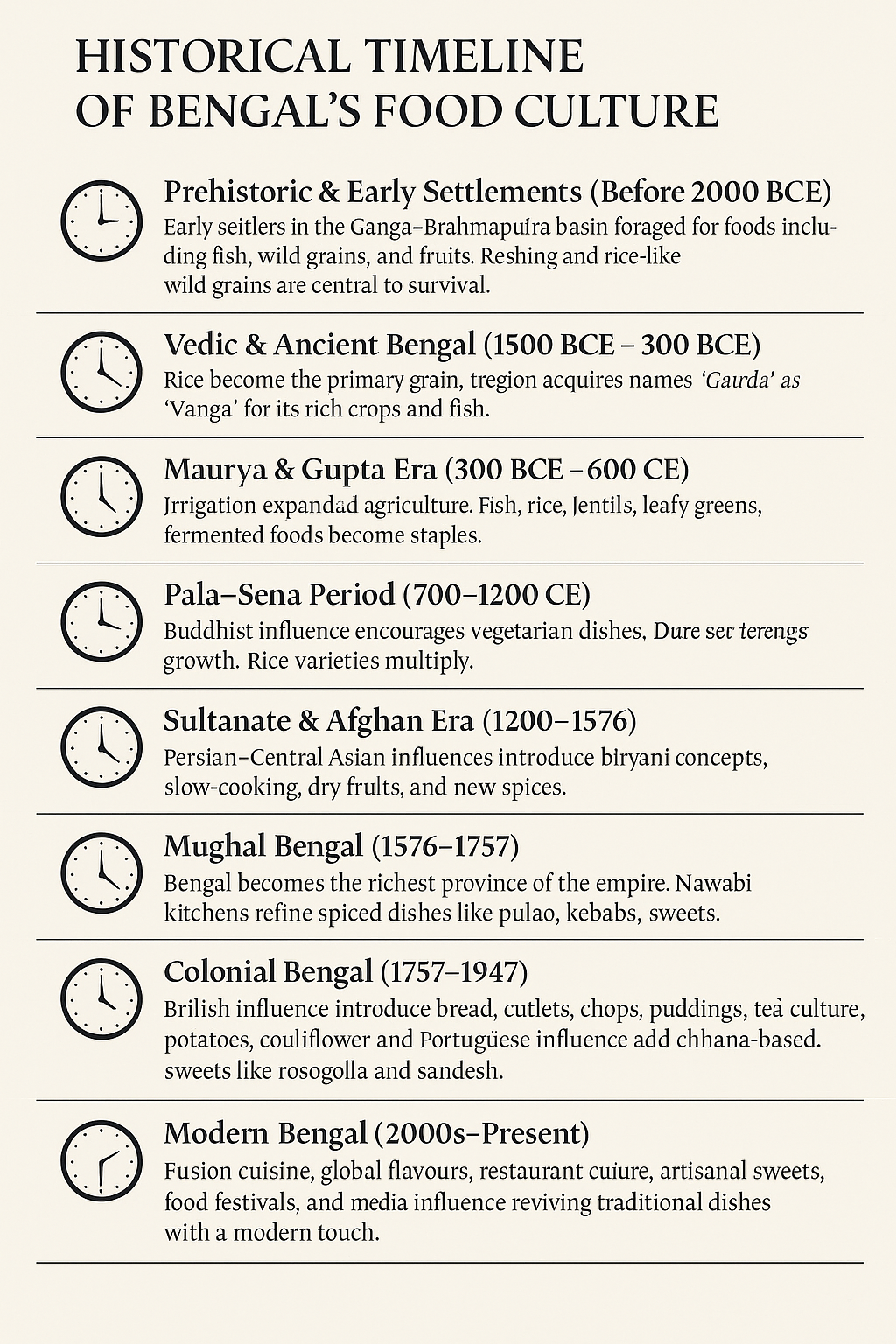
🕰️ 1. Prehistoric & Early Settlements (Before 2000 BCE)
Early settlers along the Ganga–Brahmaputra basin lived on foraged foods, fish, wild grains, roots, and fruits. Fishing and rice-like wild grains were already central to survival.
🕰️ 2. Vedic & Ancient Bengal (1500 BCE – 300 BCE)
Rice becomes the primary grain; the region earns names like “Gauda” and “Vanga” for its rich crops and fish. Early spice use begins — mustard, ginger, turmeric, and aromatic herbs.
🕰️ 3. Maurya & Gupta Era (300 BCE – 600 CE)
Irrigation expands agriculture. Rice, fish, lentils, leafy greens, and early fermented foods become staples. Trade introduces new fruits, spices, and cooking influences.
🕰️ 4. Pala–Sena Period (700–1200 CE)
Buddhist influence encourages vegetarian dishes. Cattle rearing expands milk-based sweets. Rice varieties multiply with improved cultivation.
🕰️ 5. Sultanate & Afghan Era (1200–1576)
Persian–Central Asian influences introduce early biryani concepts, slow-cooking techniques, dry fruits, nuts, and new spices. River fish remains central to daily food.
🕰️ 6. Mughal Bengal (1576–1757)
Bengal becomes the wealthiest province of the empire. Nawabi kitchens refine spiced dishes, pulao, kebabs, sherbets, and sweets. Culinary arts flourish with sophistication.
🕰️ 7. Colonial Bengal (1757–1947)
British influence introduces bread, cutlets, chops, puddings, tea culture, potatoes, and cauliflower.
Portuguese settlers introduce chhana-based sweets like rosogolla, sandesh, and chumchum.
🕰️ 8. Bengal Renaissance Kitchens (1900–1940)
Elite and intellectual households blend European, Mughal, and traditional Bengali techniques, creating a new urban culinary identity.
🕰️ 9. Partition & Two Bengals (1947 onwards)
East Bengal (Bangladesh) and West Bengal develop distinct culinary styles:
• East: freshwater fish, sharp mustard, bhorta traditions, rice-rich meals.
• West: wider sweet culture, diverse vegetarian dishes, and global ingredients.
🕰️ 10. Urbanisation & Street-Food Boom (1970–2000)
Kolkata becomes a hub of kati rolls, chops, cutlets, phuchka, ghugni, and Chinese–Indian fusion.
🕰️ 11. Modern Bengal (2000s–Present)
Fusion cuisine, global flavours, restaurant culture, artisanal sweets, food festivals, and digital media revive traditional dishes with modern techniques.
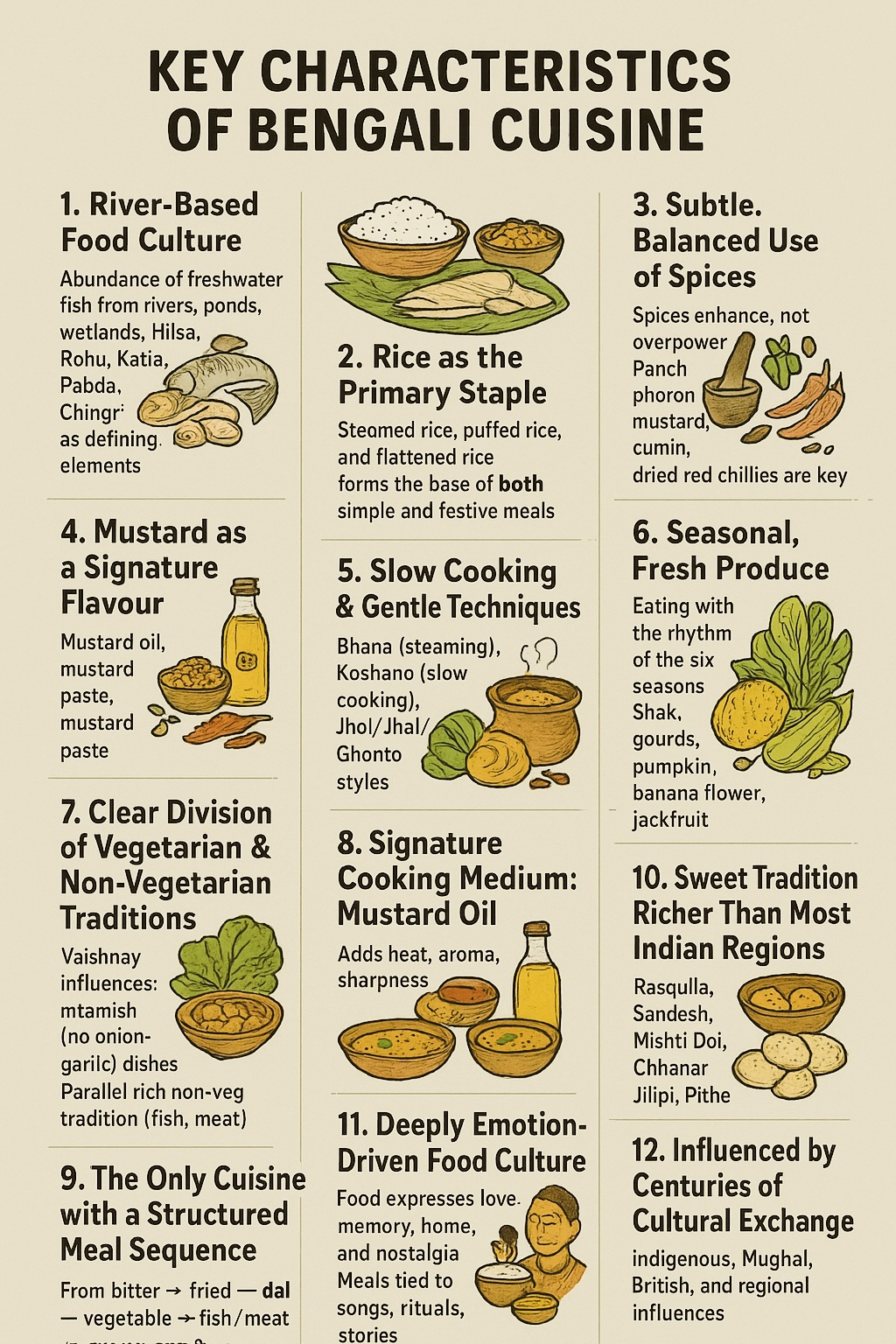
A Journey Through Flavour, Heritage, Memory, and Tradition
- River-Based Food Culture
A land shaped by rivers, Bengal depends on freshwater fish sourced from rivers, ponds, and wetlands. Hilsa, Rohu, Katla, Pabda, and Chingri help define Bengal’s culinary identity - Rice as the Essential Staple
Rice appears in countless forms — steamed rice, puffed rice, flattened rice — giving essence to daily meals and festive feasts - Subtle, Balanced Use of Spices
Spices are used to elevate the flavour while keeping the dish balanced. Key Spices: panch phoron, mustard, cumin, dried red chillies. - Mustard: The Iconic Flavour
Mustard oil, mustard paste, and mustard seeds are used widely, giving an earthy character to many Bengali dishes—especially in fish dishes, vegetable dishes, and pickles. - Slow, Gentle & Deliberate Cooking Techniques
Traditional methods emphasise patience and depth:
Bhapa (steaming), Koshano (slow cooking), Jhol, Jhal, Ghonto. - Seasonal Eating Culture
Bengalis eat with the rhythm of the six seasons — shak, gourds, pumpkin, banana flower, jackfruit, and other produce appear according to their natural cycles. - Dual Culinary Heritage: Vegetarian & Non-Vegetarian
Vaishnav influences created a strong niramish (no onion–garlic) cuisine, while a rich non-vegetarian heritage of fish and meat developed alongside it. - Mustard Oil as the Signature Medium
Its unique aroma, heat, and unmistakable sharpness make mustard oil one of the distinctive markers of Bengali cooking. - A Unique, Structured Meal Sequence
- Meals follow a rare, traditional order:
Bitter → Fried → Dal → Vegetable → Fish/Meat → Sour → Sweet - A Celebrated Sweet Tradition
Rasgulla, Sandesh, Mishti Doi, Chhanar Jilipi, Pithe — delicate milk-based masterpieces passed down through generations. - Food as Emotion, Memory & Story
Bengali food lives in nostalgia, rituals, songs, festivals, and the timeless ‘taste of home. It carries love, memory, and a sense of belonging. - Shaped by Centuries of Cultural Exchange
Bengal’s original roots blend with Mughal, British, and neighbouring influences — forming a cuisine both varied and distinctly Bengali.
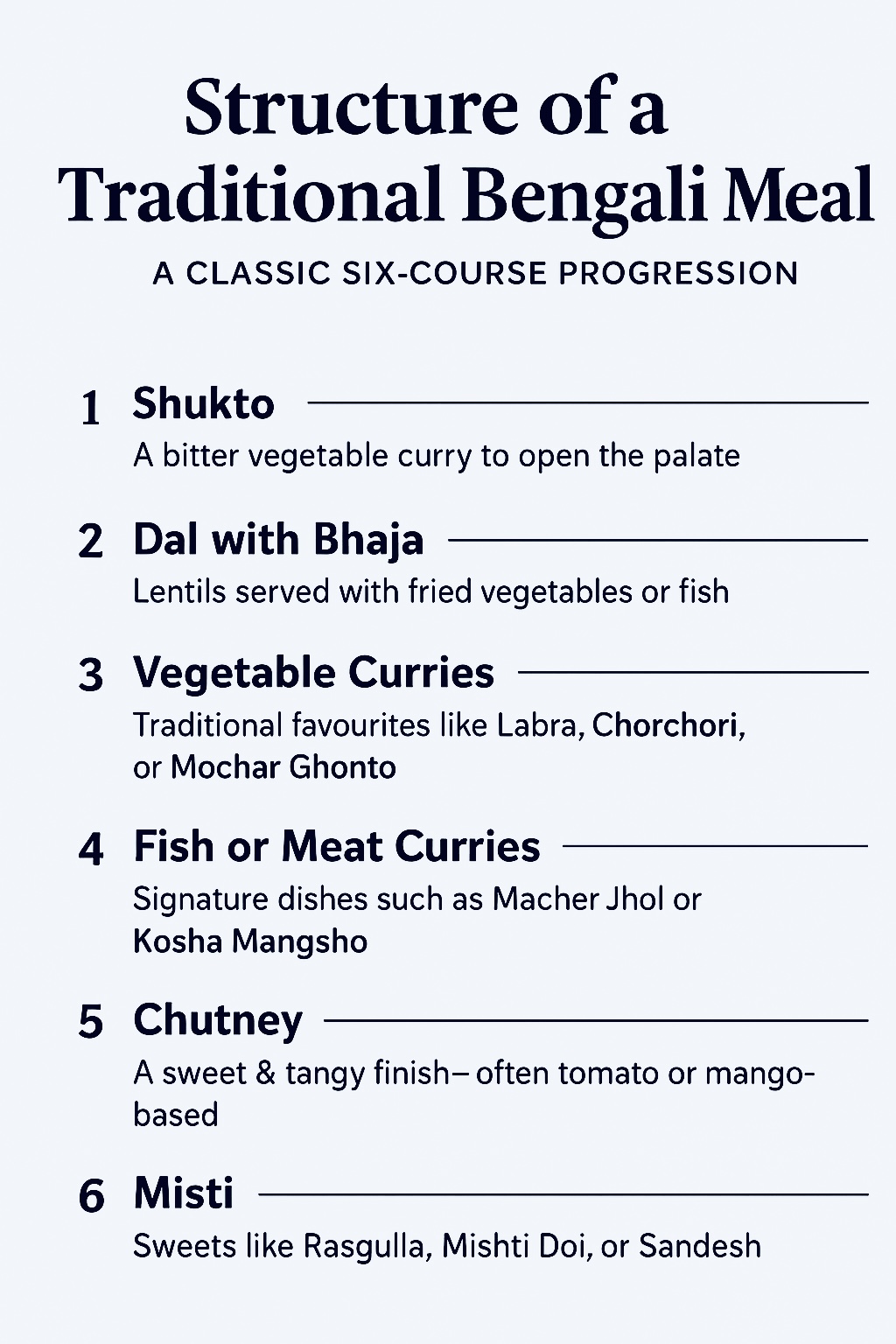
A Journey from Bitter to Sweet, Where Every Course Tells a Story
1️⃣ Shukto (bitter vegetable stew) – a bitter vegetable curry to open the palate.
2️⃣ Dal (lentil soup) with Bhaja (fried items) – lentils served with fried vegetables or fish.
3️⃣ Vegetable Curries – like Labra, Chorchori, or Mochar Ghonto.
4️⃣ Fish or Meat Curries – such as Macher Jhol or Kosha Mangsho.
5️⃣ Chutney (sweet & tangy sauce) – sweet and tangy, often tomato or mango-based.
6️⃣ Misti (dessert) – sweets like Rasgulla, Mishti Doi, Sandesh.
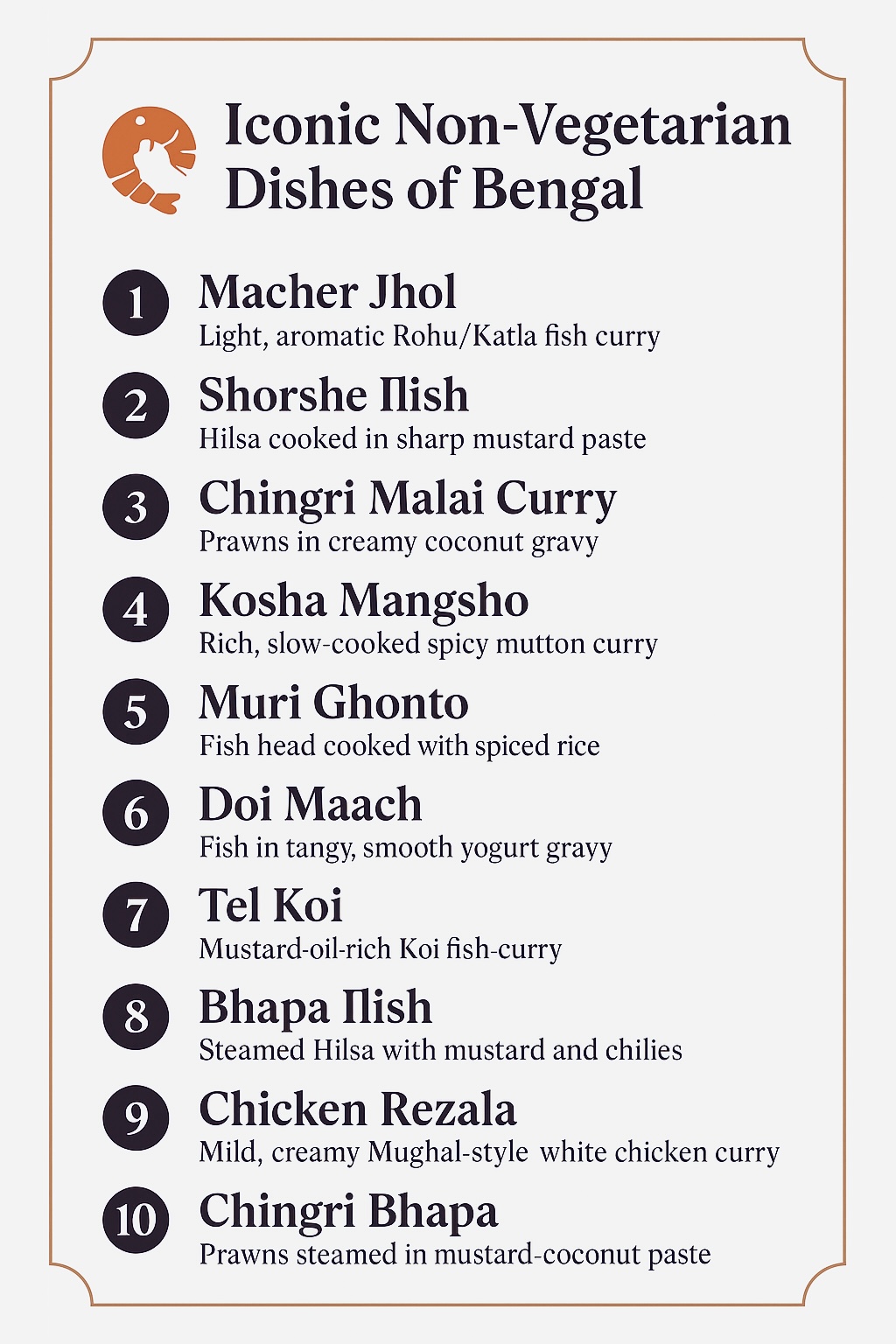
From rivers to kitchens, a story of flavor, tradition, and celebration
1️⃣ Macher Jhol (Fish Curry)
A light, aromatic fish curry—usually made with Rohu or Katla—balanced with potatoes, tomatoes, and green chilies.
2️⃣ Shorshe Ilish (Hilsa in Mustard)
The legendary Bengali dish: Hilsa cooked in a sharp mustard paste, offering rich aroma and bold flavour.
3️⃣ Chingri Malai Curry (Prawn in Coconut Cream)
Large prawns simmered in a creamy coconut-based gravy—luxurious, mildly spiced, and deeply satisfying.
4️⃣ Kosha Mangsho (Slow-Cooked Mutton Curry)
A thick, dark, caramelized mutton curry bursting with spices—iconic in Sunday lunch traditions.
5️⃣ Muri Ghonto (Fish Head Rice Curry)
A unique Bengali delicacy made with fish head (usually Rohu) cooked with spiced rice.
6️⃣ Doi Maach (Fish in Yogurt Sauce)
Fish cooked in a rich, tangy yogurt gravy—smooth, mild, and festive.
7️⃣ Tel Koi (Koi Fish Curry)
Koi fish prepared with minimal spices but lots of mustard oil—simple, flavorful, and distinctly Bengali.
8️⃣ Bhapa Ilish (Steamed Hilsa)
Hilsa steamed with mustard, green chilies, and mustard oil—pure, delicate flavours.
9️⃣ Chicken Rezala
A Mughal-inspired white chicken curry—mild, creamy, and aromatic with cardamom and kewra.
🔟 Chingri Bhapa (Steamed Prawns)
Prawns steamed in mustard–coconut paste, wrapped in banana leaf or cooked in a sealed pot.
Simple ingredients, soulful cooking, and the heritage of generations
1️⃣ Shukto
A creamy, gently bitter vegetable medley prepared from bitter gourd, drumsticks, potatoes, and sometimes a touch of milk or mustard. Traditionally, Shukto begins the Bengali meal, cleansing and refreshing the palate.
2️⃣ Labra
A wholesome, slow-cooked combination of pumpkin, brinjal, potatoes, spinach, and other seasonal vegetables. Lightly spiced and gently sweet, Labra highlights the natural flavours of seasonal vegetables.
3️⃣ Chorchori
A traditional Bengali-style semi-dry vegetable preparation where mixed vegetables are slowly cooked in mustard oil and tempered with panch phoron until delicately charred. The resulting caramelized flavours define classic Bengali cooking.
4️⃣ Mochar Ghonto
A delicately spiced preparation of banana blossom, coconut, and aromatic spices, sometimes enriched with lentil dumplings (bori). Filled with earthy aroma and gentle warmth, this dish reflects the artistry of Bengali vegetarian cooking.
5️⃣ Chhanar Dalna
Soft homemade cottage cheese (chhana) cubes simmered in a mildly sweet tomato-based gravy with potatoes. Elegant, simple, and commonly prepared during auspicious occasions.
6️⃣ Alu Posto
A comfort classic where potatoes are coated in a silky poppy-seed (posto) paste, gently flavoured with green chilies and mustard oil. Simple in spices, yet rich in flavour.
7️⃣ Dhokar Dalna
Crisp fried lentil cakes made from chana dal, simmered in a rich tomato-ginger gravy. A classic pure-vegetarian favourite during fasting days and festive meals.
8️⃣ Lau Ghonto
A delicate curry of soft-cooked bottle gourd, often topped with crisp lentil dumplings (bori) for a delightful contrast—light, comforting, and gently flavoured.
9️⃣ Cholar Dal
A homestyle festive dish of Bengal gram lentils, delicately cooked with coconut, raisins, and fragrant ghee. Mildly sweet and aromatic, it is traditionally enjoyed with luchi.
🔟 Begun Bhaja
Thick rounds of marinated brinjal, fried until golden brown and aromatic—crispy on the outside and buttery on the inside. A simple dish with immensely satisfying flavours.

Sweetness that melts hearts and preserves memories of every celebration
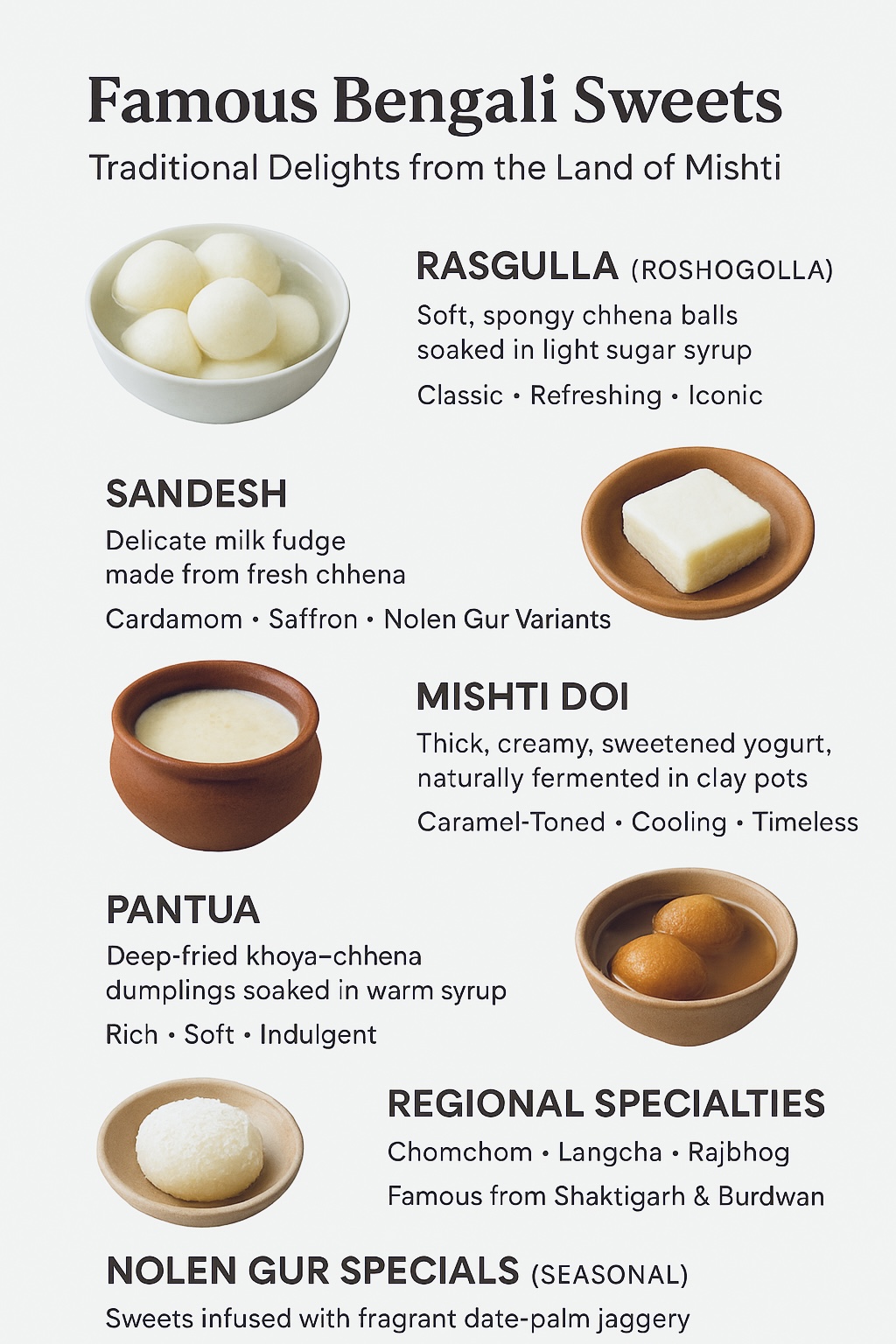
No Bengali meal ever feels complete without a touch of sweetness! Here’s a delightful journey through Bengal’s most beloved mishti:
🌕 Rasgulla (Roshogolla)
Soft, spongy balls of fresh chhena soaked in a light sugar syrup—simple, pure, and heavenly. This iconic sweet melts in the mouth and in the heart.
🍥 Sandesh
A delicate milk fudge made from chhena, lightly flavored with cardamom, saffron, or jaggery. From traditional kodapak to modern fusion varieties, Sandesh is Bengal’s pride.
🥣 Mishti Doi
Thick, creamy, and mildly sweetened yogurt, naturally fermented in clay pots. Its subtle caramel flavor and smooth texture make it an irresistible classic.
🔥 Pantua
Deep-fried golden dumplings made of khoya and chhena, soaked in warm syrup. Rich, soft, and indulgent—Pantua is the warm embrace of Bengali sweets.
🍯 Chomchom, Langcha & Rajbhog
Regional treasures from the sweet towns of Bengal like Burdwan and Shaktigarh.
- Chomchom: Oval delights coated with coconut or khoya.
- Langcha: Long, dark-brown fried sweets soaked in syrup.
- Rajbhog: Bigger, richer cousins of rasgullas, often stuffed with dry fruits.
🌴 Nolen Gur Delicacies (Winter Specials)
Made with fragrant date-palm jaggery, available only in winter—these include Nolen Gur Sandesh, Nolen Gur Rasgulla, and Patali Mishti Doi. Each bite carries the warm, smoky aroma of Bengal’s beloved winter sweetener.
A journey through the bustling streets, where every bite sings of spice and joy
1️⃣ Phuchka
Crisp semolina shells filled with tangy tamarind water, spicy mashed potatoes, and herbs—bursting with sharp, refreshing flavours.
2️⃣ Jhalmuri
A fiery mix of puffed rice, mustard oil, green chilies, peanuts, and chopped veggies—light, crunchy, and instantly addictive.
3️⃣ Ghugni
Slow-cooked yellow peas topped with chopped onions, tamarind, and spices—warm, comforting, and full of homely flavours.
4️⃣ Kathi Roll
Soft paratha wrapped around smoky tawa-grilled fillings—egg, paneer, or vegetables—with tangy chutneys and onions.
5️⃣ Telebhaja
Deep-fried delights like beguni, peyaji, alur chop, and phuluri—crispy, golden, and perfect with evening tea.
6️⃣ Kochuri–Torkari
Fluffy stuffed kochuris with a spicy potato curry—simple, aromatic, and a beloved morning street staple.
7️⃣ Chicken/Paneer Chowmein
Street-style noodles tossed with vegetables and sauces—fast, flavourful, and satisfying.
8️⃣ Chowk–er Chai
Strong, smoky milk tea in clay cups—aromatic, earthy, and the soul of Bengal’s street corners.
9️⃣ Mishti Doi & Rosogolla
Classic Bengali sweets sold fresh from local shops—creamy, light, and nostalgically comforting.
🔟 Egg Devil
Boiled eggs encased in spiced potato mash and deep-fried to crisp perfection.
1️⃣1️⃣ Mughlai Paratha
Flaky paratha stuffed with egg and spices—crispy outside, soft and flavour-packed inside.
1️⃣2️⃣ Aloor Dum–Luchi
Puffed luchis with rich Kashundi-flavoured potato curry—breakfast royalty.
1️⃣3️⃣ Fish Fry
Bhetki fillets crumb-fried to golden perfection—crunchy outside, flaky inside.
1️⃣4️⃣ Cutlet & Kabiraji
Classic cutlets fried in crumbs; Kabiraji wrapped in an airy, net-like egg crust—old-Calcutta charm.
1️⃣5️⃣ Ghoti Gorom
Roasted peanuts tossed with onions, chillies, and mustard oil—warm, smoky, nostalgic.
1️⃣6️⃣ Papri Chaat
Crispy papri with potatoes, yogurt, chutneys—sweet, tangy, and layered with flavour.
1️⃣7️⃣ Aloo Kabli
Boiled potatoes mixed with tamarind, cumin, chillies, and chickpeas—tangy, spicy favourite.
1️⃣8️⃣ Chhanar Jilipi
Curly paneer jalebis soaked in syrup—warm, juicy, uplifting.
1️⃣9️⃣ Baked Chops
Crumbed vegetable or fish chops baked instead of fried—lighter and flavourful.
2️⃣0️⃣ Ice Cream Soda / Lemon Malai Soda
Street-style fizzy coolers with lemon or ice cream—sweet, refreshing summer favourites.

From hills to deltas, every region tells its story through taste and tradition
1️⃣ Shukto (bitter vegetable stew) – a bitter vegetable curry to open the palate.
2️⃣ Dal (lentil soup) with Bhaja (fried items) – lentils served with fried vegetables or fish.
3️⃣ Vegetable Curries – like Labra, Chorchori, or Mochar Ghonto.
4️⃣ Fish or Meat Curries – such as Macher Jhol or Kosha Mangsho.
5️⃣ Chutney (sweet & tangy sauce) – sweet and tangy, often tomato or mango-based.
6️⃣ Misti (dessert) – sweets like Rasgulla, Mishti Doi, Sandesh.
Introduction
“The history of Bengal’s food is not just nourishment — it is a fascinating blend of heritage, flavour, geography, and a journey of emotion — shaped by the mighty rivers, the fertile deltaic plains, and centuries of cultural exchange.”
🌊 Rivers & the Fertile Land of Bengal
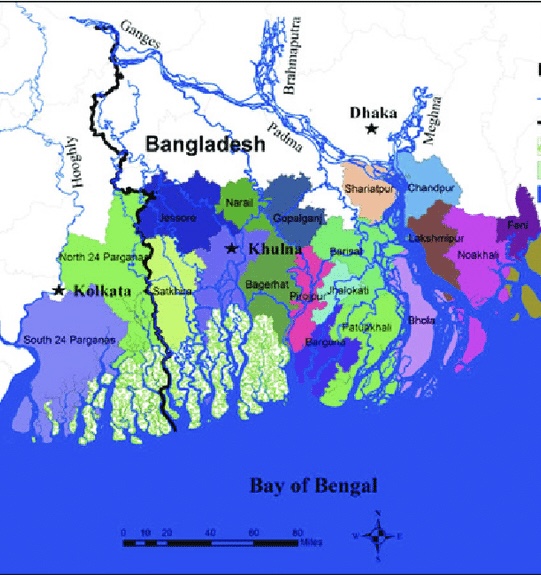
Shaped by the mighty rivers Ganga and Brahmaputra in West Bengal (India), and Padma and Jamuna in East Bengal (Bangladesh), together these rivers form the Bengal Delta — one of the most fertile regions in the world.
The land breathes with the rhythm of the monsoon.
When the rains arrive, fields flood, rivers overflow, and life moves in harmony with the seasons.
This unique geography created an environment where rice, fish, and seasonal produce grew naturally and abundantly.
The delta’s rich alluvial soil nourished agriculture, while the interconnected rivers sustained fishing communities.
Bengal’s cuisine was shaped by this landscape —
the rivers determined what people ate, how they lived, and how food traditions evolved over centuries.

🌾 Life Rooted in the Land: Agrarian Bengal & Its Daily Food Traditions
This unique geography and monsoon climate deeply shaped Bengal’s food culture.
Fertile soil, abundant rainfall, and endless rivers supported an agrarian lifestyle where rice, fish, and seasonal vegetables formed the foundation of daily meals.
The rhythm of Bengal’s daily life — from its folk songs to its kitchens — rises from these rivers.
Every meal carried the story of the land, the rain, and the harvest.
The fertile deltaic plains fostered a rice-based farming culture. Rice grows in abundance across its water-rich fields.
Freshwater fish and seasonal vegetables formed the staples of daily food, sustained by the countless varieties of fish that thrive in Bengal’s rivers, canals, and ponds.
The humid, tropical climate encouraged light, balanced meals — often flavoured with mustard, poppy seeds, coconut, and fresh herbs.
Each season brought its own harvests and flavours, making Bengal’s cuisine a clear reflection of its natural environment.
🌾🌍 Cultural Exchange & the Making of Bengal’s Culinary Identity
Centuries of cultural exchange — from indigenous foodways, tribal traditions, and riverland farming practices to the refinement of Mughal courts, tastes shaped by European traders, and the culinary habits of British colonial households — gradually shaped a cuisine that is both remarkably diverse and deeply rooted. These continuous interactions with neighbouring regions and communities wove Bengal into a true cultural crossroads, where every influence left its imprint on the plate.
Bengali food is defined by gentle yet expressive spice profiles, the use of fresh seasonal ingredients, and a rare harmony between vegetarian purity and fish-based abundance.
Equally distinctive is its traditional multi-course meal sequence — a carefully curated journey from bitter to sour, to savoury, and finally to sweet — reflecting a worldview shaped by balance, rhythm, and the natural order of flavours.
⭐ Festivals & Ritual Foods
Bengal’s festivals are inseparable from their food traditions. Across seasons, regions, and communities, every celebration carries a distinctive aroma — of devotion, seasonal change, harvest cycles, and collective joy. In Bengal, food is not merely an accompaniment to festivals; it is an essential part of the ritual itself. A festival meal becomes an offering to deities, a gesture of togetherness within families, and a celebration of the land’s bounty. The rhythm of Bengal’s cultural and religious calendar is deeply tied to the kitchen, where flavours turn into symbols of faith, prosperity, and gratitude.
Durga Puja, Bengal’s grandest celebration, beautifully captures this connection between devotion and food. The sacred bhog — a simple yet divine platter of khichuri, labra, chutney, payesh, and papad or luchi — is more than a meal; it is believed to carry the Goddess’s blessings. The fragrance of ghee, the warmth of community cooking, and the act of eating together reflect Bengal’s collective spirit. As winter arrives, Bengal moves into the season of pithe during Poush Sankranti and Poush Parbon, when households prepare rice cakes such as patishapta, bhapa pitha, dudh puli, and chitoi pitha using newly harvested rice flour, coconut, and date palm jaggery. These delicacies embody the sweetness of home and the warmth of rural kitchens.
Nabanna marks the festival of new rice, celebrating the first harvest of the season. Families enjoy pitha, payesh, chirer pulao, panta bhat, and freshly harvested-rice khichuri, expressing gratitude for nature’s abundance and reaffirming their bond with the soil. Pohela Boishakh, the Bengali New Year, opens with a spread rooted in simplicity and heritage — panta ilish, green chillies, onions, curd, sweets, and fruits — symbolizing prosperity, purity, and new beginnings.
For Bengali Muslims, Eid-ul-Fitr and Eid-ul-Adha bring flavours of generosity and celebration. Homes fill with aromas of shemai, firni, biryani, rezala, bakarkhani, and kebabs, shared warmly among family, neighbours, and friends. Christmas in Bengal, shaped by colonial history yet fully embraced locally, fills bakeries with plum cakes, cookies, and spiced breads, especially in Kolkata’s Anglo-Indian community.
Saraswati Puja adds another layer of simplicity to Bengal’s festive table, with offerings of khichuri, batasha, fruits, and sweets, observed as a day of vegetarian purity dedicated to learning. Jamai Shoshti, celebrating family bonds, features an elaborate feast for the son-in-law — often highlighting fish, prawns, sweets, and seasonal fruits — reflecting affection and familial warmth.
Across all these celebrations, ritual food is more than a traditional dish; it is an emotional archive preserved across generations. Each flavour carries memories of home, belonging, childhood, and community. To taste festival food in Bengal is to experience its culture in its purest, most heartfelt form.
Modern Bengal & Global Influences
Centuries of cultural exchange — from indigenous foodways, tribal traditions, and riverland farming practices to the refinement of Mughal courts, tastes shaped by European traders, and the culinary habits of British colonial households — gradually shaped a cuisine that is both remarkably diverse and deeply rooted. These continuous interactions with neighbouring regions and communities wove Bengal into a true cultural crossroads, where every influence left its imprint on the plate.
Bengali food is defined by gentle yet expressive spice profiles, the use of fresh seasonal ingredients, and a rare harmony between vegetarian purity and fish-based abundance.
Equally distinctive is its traditional multi-course meal sequence — a carefully curated journey from bitter to sour, to savoury, and finally to sweet — reflecting a worldview shaped by balance, rhythm, and the natural order of flavours.
The Bengali Sweet Tradition
Centuries of cultural exchange — from indigenous foodways, tribal traditions, and riverland farming practices to the refinement of Mughal courts, tastes shaped by European traders, and the culinary habits of British colonial households — gradually shaped a cuisine that is both remarkably diverse and deeply rooted. These continuous interactions with neighbouring regions and communities wove Bengal into a true cultural crossroads, where every influence left its imprint on the plate.
Bengali food is defined by gentle yet expressive spice profiles, the use of fresh seasonal ingredients, and a rare harmony between vegetarian purity and fish-based abundance.
Equally distinctive is its traditional multi-course meal sequence — a carefully curated journey from bitter to sour, to savoury, and finally to sweet — reflecting a worldview shaped by balance, rhythm, and the natural order of flavours.
The Bengali Kitchen — Tools & Techniques
Centuries of cultural exchange — from indigenous foodways, tribal traditions, and riverland farming practices to the refinement of Mughal courts, tastes shaped by European traders, and the culinary habits of British colonial households — gradually shaped a cuisine that is both remarkably diverse and deeply rooted. These continuous interactions with neighbouring regions and communities wove Bengal into a true cultural crossroads, where every influence left its imprint on the plate.
Bengali food is defined by gentle yet expressive spice profiles, the use of fresh seasonal ingredients, and a rare harmony between vegetarian purity and fish-based abundance.
Equally distinctive is its traditional multi-course meal sequence — a carefully curated journey from bitter to sour, to savoury, and finally to sweet — reflecting a worldview shaped by balance, rhythm, and the natural order of flavours.
Dining Experience — Rituals & Sequence
Centuries of cultural exchange — from indigenous foodways, tribal traditions, and riverland farming practices to the refinement of Mughal courts, tastes shaped by European traders, and the culinary habits of British colonial households — gradually shaped a cuisine that is both remarkably diverse and deeply rooted. These continuous interactions with neighbouring regions and communities wove Bengal into a true cultural crossroads, where every influence left its imprint on the plate.
Bengali food is defined by gentle yet expressive spice profiles, the use of fresh seasonal ingredients, and a rare harmony between vegetarian purity and fish-based abundance.
Equally distinctive is its traditional multi-course meal sequence — a carefully curated journey from bitter to sour, to savoury, and finally to sweet — reflecting a worldview shaped by balance, rhythm, and the natural order of flavours.
Regional Variations — East & West Bengal
Centuries of cultural exchange — from indigenous foodways, tribal traditions, and riverland farming practices to the refinement of Mughal courts, tastes shaped by European traders, and the culinary habits of British colonial households — gradually shaped a cuisine that is both remarkably diverse and deeply rooted. These continuous interactions with neighbouring regions and communities wove Bengal into a true cultural crossroads, where every influence left its imprint on the plate.
Bengali food is defined by gentle yet expressive spice profiles, the use of fresh seasonal ingredients, and a rare harmony between vegetarian purity and fish-based abundance.
Equally distinctive is its traditional multi-course meal sequence — a carefully curated journey from bitter to sour, to savoury, and finally to sweet — reflecting a worldview shaped by balance, rhythm, and the natural order of flavours.
The Future of Bengali Food
Centuries of cultural exchange — from indigenous foodways, tribal traditions, and riverland farming practices to the refinement of Mughal courts, tastes shaped by European traders, and the culinary habits of British colonial households — gradually shaped a cuisine that is both remarkably diverse and deeply rooted. These continuous interactions with neighbouring regions and communities wove Bengal into a true cultural crossroads, where every influence left its imprint on the plate.
Bengali food is defined by gentle yet expressive spice profiles, the use of fresh seasonal ingredients, and a rare harmony between vegetarian purity and fish-based abundance.
Equally distinctive is its traditional multi-course meal sequence — a carefully curated journey from bitter to sour, to savoury, and finally to sweet — reflecting a worldview shaped by balance, rhythm, and the natural order of flavours.